Liv Pur Nutritional Supplements

Showing posts with label healthy eating. Show all posts

Wednesday, February 22, 2023

Salt is Salt Right? Table Salt VS Celtic Sea Salt


During a conversation with a medical doctor, he said that salt is salt, and it doesn't matter what type you use. While in a very narrow spectrum that statement is true in regards to sodium chloride, there are many differences between different types of salt.

The differences are mainly in the type of refining, manufacturing and processing. Lets take a look at common table salt compared to Celtic sea salt.

Table salt and Celtic sea salt are both made from the same basic ingredients: sodium chloride and trace minerals. But there are a few key differences between the two that make one more beneficial than the other.

Some table salt is iodized, which means that it contains a small amount of iodine. It's also highly refined, meaning it has been processed to remove impurities and other minerals, which can make it less healthy than unrefined salt. If you do use regular table salt, make sure it is iodized.

Table salt is a refined product of sodium chloride, which means it contains no other minerals. Because it has been stripped of its original minerals, it can actually be harmful to your health. Not to mention all the additives they put in it! And because table salt has all of its minerals removed, it doesn't help to balance the blood pressure. Consequently, table salt causes gross blood pressure fluctuations, instead of stabilizing it. This well-known danger has created an entire industry of "low sodium" foods.

It is also treated with anti-caking agents to prevent it from clumping together. This means that it's less effective at dissolving in water, which means that your body absorbs less of it when you eat it. It also has a higher sodium content than most people's bodies need. Too much sodium can lead to high blood pressure and cardiovascular disease.

Refined, processed table salt contains ferrocyanide, talc, and silica aluminate. Aluminum intake leads to neurological disorders, particularly when no selenium is provided to help the body to chelate it. Aluminum bio-accumulates inside the body, causing further degeneration over time. Talc is a known carcinogen, though its effects upon ingestion have not been heavily studied. 

While it was once used in baby powders, the majority of such products now use cornstarch instead of talc, because of the known health risks. The F.D.A. has a special provision to allow talc in table salt, even whilst it is prohibited in all other foods, due to toxicity issues. According to current regulations, table salt can be up to 2% talc.- Thanks a lot FDA!

Celtic sea salt, on the other hand, comes from evaporated seawater that's been naturally filtered through layers of sand, gravel, clay and granite over thousands of years. Meaning that it contains only natural ingredients with no additives or chemicals. Its coarse texture also means that it dissolves quicker than table salt in liquids like soups and stews, which helps your body absorb more nutrients from food.

It is unrefined, and therefore not iodized or refined. It is harvested from seawater in France, where the water contains over 80 different trace minerals. These include calcium, magnesium, potassium and iron, all of which are essential for our bodies. It also contains lower amounts of iodine, which supports healthy thyroid function and helps prevent goiter (an enlarged thyroid gland). While the amount of iodine in Celtic sea salt is reportedly lower than processed table salt, it is an all-natural, pure source of iodine that is quickly absorbed and stored by your body.

So I would say that Celtic Sea Salt is a healthier option over table salt any day. 

Remember the key to beneficial salt intake is to get in the right amount. Not too much or too little. The American Heart Association recommends no more than 2,300 mg a day for mostly healthy adults. And no more than 1,500 mg per day, for adults with hypertension or heart disease.

Use iHerb coupon code HFB1638 to get 10% off through my link below.

Tuesday, February 21, 2023

Meal Idea and Some Weight Loss Advice


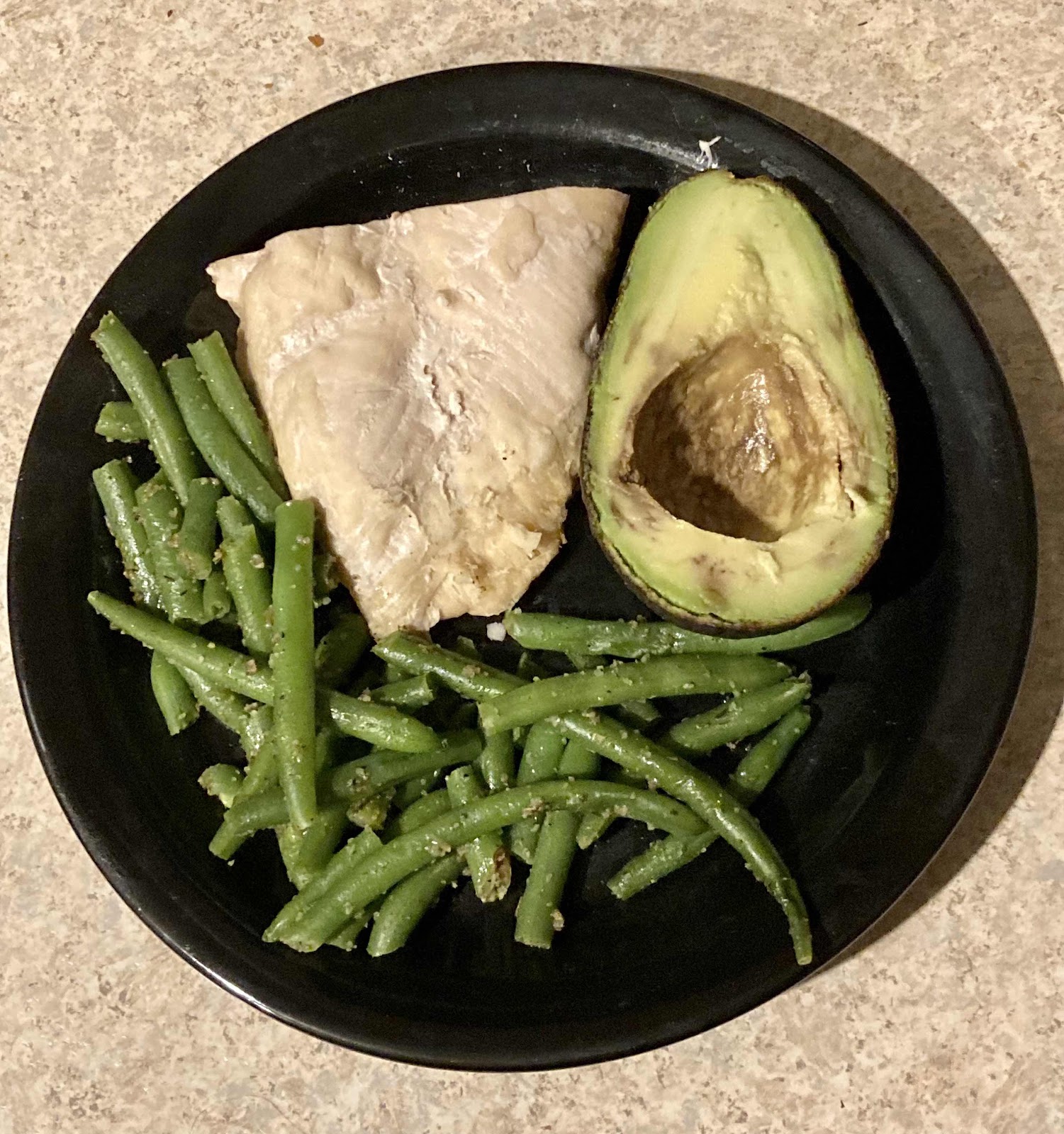
Meal idea and some nutrition advice.

Baked chicken, avocado and green beans. 

Macronutrients: Chicken is the protein, avocado is the fat and the greens beans are fibrous carbs. 

Improper macronutrient ratio causes people many problems during their dieting or weight loss efforts. 

A simple example of a cultural norm / nutrition issue is the traditional southern meal practice of having a meat, starchy carbs and vegetables, plus desert, with no deliberate fat source. 

This example is high carb, medium/low protein and low/no fat. This could possibly be suitable for an athlete but it is a nightmare for someone who is dieting trying to lose body fat or “weight”. 

If you eat like this regularly, with a low activity level, and throw in some hormonal or thyroid issues, your weight loss efforts are for naught. This is very common. I’ve seen it a lot over the last 20 years. 

For fat loss or ”weight loss” you can simply fix the macronutrient content of the meal and start seeing results. 

Shift to high protein, medium fat, low carb and things will almost immediately change. Keep your carbs to mostly vegetables and go easy - like next to none, on the starches and sugar. 

Oh yeah might want to ease up on the after work 12 pack or bottle of wine every night. That throws a serious curve ball into the old diet bin. 

Drink more water over the course of the day. A good goal target is a gallon a day for most people. Make sure you intake electrolytes as well. Don’t drink too much, too fast, or you’ll risk injury in the form of hyponatremia which is when you flush out your electrolytes and sodium. It causes symptoms eerily similar to heat injuries and was misdiagnosed in the army for decades. 

Apply these concepts and see results in days, not weeks or months. I’ve had dozens of clients over the decades achieve ridiculous things in a week or two just by making these simple changes. 

But most people won’t do it. They stick to stupid stuff like starving yourself and doing hours of cardio. After all your doctor told you to eat less and exercise more right? 

Do the smart stuff and get healthy results or do the stupid stuff that they’ve brainwashed you with since the ‘50s, and become a worthy skinny fat diseased candidate for the FEMA death camps 😀.  Your call!

Thursday, January 12, 2023

Nutrition Guidelines for Older Adults


The dietary guidelines for older adults recommend that they consume a variety of foods, including fruits, vegetables, whole grains, fat-free or low-fat milk and milk products, beans and peas, lean meats and poultry, fish, eggs, and nuts. 

- Choose foods and beverages that limit calories from added sugars, solid fats and alcohol.

- Eat a variety of nutrient-dense foods to meet your nutritional needs.

- Choose a diet with plenty of vegetables, fruits, whole grains, fat-free or low-fat dairy products, lean meat and poultry and fish.

- Limit sodium (salt) intake to less than 2,300 mg/day.

Older adults need to consume a diet that is high in fiber, low in saturated fat, and rich in vitamins and minerals. The following are some key points to consider when planning a diet for older adults:

- Older adults should consume at least 30 grams of fiber each day.

- A diet that includes lots of fruits and vegetables will help older adults meet their daily vitamin and mineral requirements.

Nutrition is an important factor for older adults. The key to healthy eating is to make informed decisions about what you eat and drink, as well as how much.

You can also help your body by making sure you get all the vitamins and minerals you need, while avoiding those that can be harmful.

Here are some tips on how to choose the right foods for older adults:

1) Eat a variety of foods in order to get all the nutrients you need.

2) Choose whole grains instead of processed ones.

3) Eat plenty of fruits, vegetables, legumes and nuts to get enough fiber and protein.

4) Choose low-fat dairy products instead of full-fat ones (milk, yogurt, cheese etc.).

5) Include fish in your diet at least twice a week; it's an excellent source of omega-3 fatty acids which may help reduce inflammation throughout the body (including in joints).

Older adults are at risk for a number of nutrition-related problems, including malnutrition, dehydration and vitamin deficiencies.

The most common problem is unintentional weight loss because of poor appetite, trouble swallowing or chewing, or other physical limitations. Older adults may also have trouble consuming enough calories to maintain their weight.

Some older adults may not be able to tell when they're hungry or thirsty, so it's important for caregivers to help them eat regularly and drink plenty of fluids.

Older adults who have trouble swallowing may need to have thickened liquids or food pureed into a liquid consistency. It's also important that they stay hydrated by drinking water throughout the day instead of waiting until they feel thirsty.

Protein intake requirements for older adults

As we age, our bodies are less able to produce certain proteins. The result is that we need more protein in our diets than when we were younger.

Older adults need to eat more protein and less carbohydrates. This is because the body's ability to use carbohydrates decreases with age, while the body's ability to use protein remains strong throughout life.

Older adults should consume 1.2 to 1.5 grams of protein per kilogram of body weight. The daily recommended intake is 0.8 g/kg for healthy adults, but this rises to at least 1 g/kg for older adults who are at risk of sarcopenia, which is the gradual loss of muscle mass and strength that occurs as we age.

Healthy fat intake requirements for older adults

Getting enough fat in your diet is important for older adults.

Older adults need to eat more than younger adults, and it's especially important that they get enough fat in their diets.

The recommended daily allowance of fat for an older adult is 20-35% of total calories, depending on age. The amount of fat in your diet should be limited to less than 10% saturated fats and less than 300 mg cholesterol per day.

This means that if your total daily calories are 2000, you should aim to take in between 500 and 700 grams of fat per day.

Fat helps you feel full and satisfied, so you'll be less likely to overeat. It also helps your body absorb essential vitamins A, D, E and K, as well as minerals such as copper and iron.

Fatty foods can also help protect against osteoporosis by keeping bones strong and healthy.

Older adults need to eat more healthy fats like avocado, nuts, fish and olive oil. These fats are good for the heart, brain and weight management.

Recent studies show that a high-fat diet is linked to lower mortality rates in people over 65 years old. This could be because high-fat foods are more satiating than low-fat foods, which means they leave you feeling fuller longer and help keep blood sugar levels stable.

In addition, the fat in certain foods can help your body absorb their nutrients better. For example, if you're eating spinach or another green vegetable that contains iron, it may not have much effect on your health if you don't eat any fat with it. 

But if you add some olive oil or nuts to the mix, then your body will absorb more of the iron from the spinach—and that could help prevent anemia!

Carbohydrate intake requirements for older adults

 Carbohydrates are the body's main source of energy and their levels in the blood stream can affect brain function, digestion, and bone mass. 

It is the body's main source of fuel and provide energy for basic functions like breathing, pumping blood, and digesting food. Carbohydrates are also important for healthy brain function.

Carbohydrates are found in many foods, including grains, fruits, vegetables and milk products.  The amount of carbohydrate you need depends on your age, gender and activity level.

Carbohydrate intake should be between 45% and 65% of your daily caloric intake.

As we age, we need the right amount of carbohydrates in our diets. This is because our bodies lose the ability to produce the hormone insulin as we age, which can lead to health problems like diabetes. 

If you're over 65 years old, your body may be less efficient at using carbohydrates for energy. This means that eating too many carbs might cause blood sugar levels to rise quickly and then fall quickly, which can lead to fatigue, headaches and irritability.

It's important to talk with your doctor or dietitian if you have concerns about how much carbohydrate you should be eating each day. As long as you keep track of what kinds of food sources contain carbohydrates (including vegetables and fruit), it's easy to meet your needs while still enjoying a balanced diet.

Calorie Requirements for Older Adults

In order to maintain your weight and keep your energy levels up, you should aim for 1,200 to 1,600 calories per day. And if you're active and are trying to maintain or gain weight, you'll need more than that range (about 1,600 to 2,400 calories per day). This will obviously vary from person to person. You will need more calories if you are active.

Always check with your doctor before starting any fitness or nutrition program. 


Tuesday, December 20, 2022

Eating in Threes is Still the Nutrition Win for Me


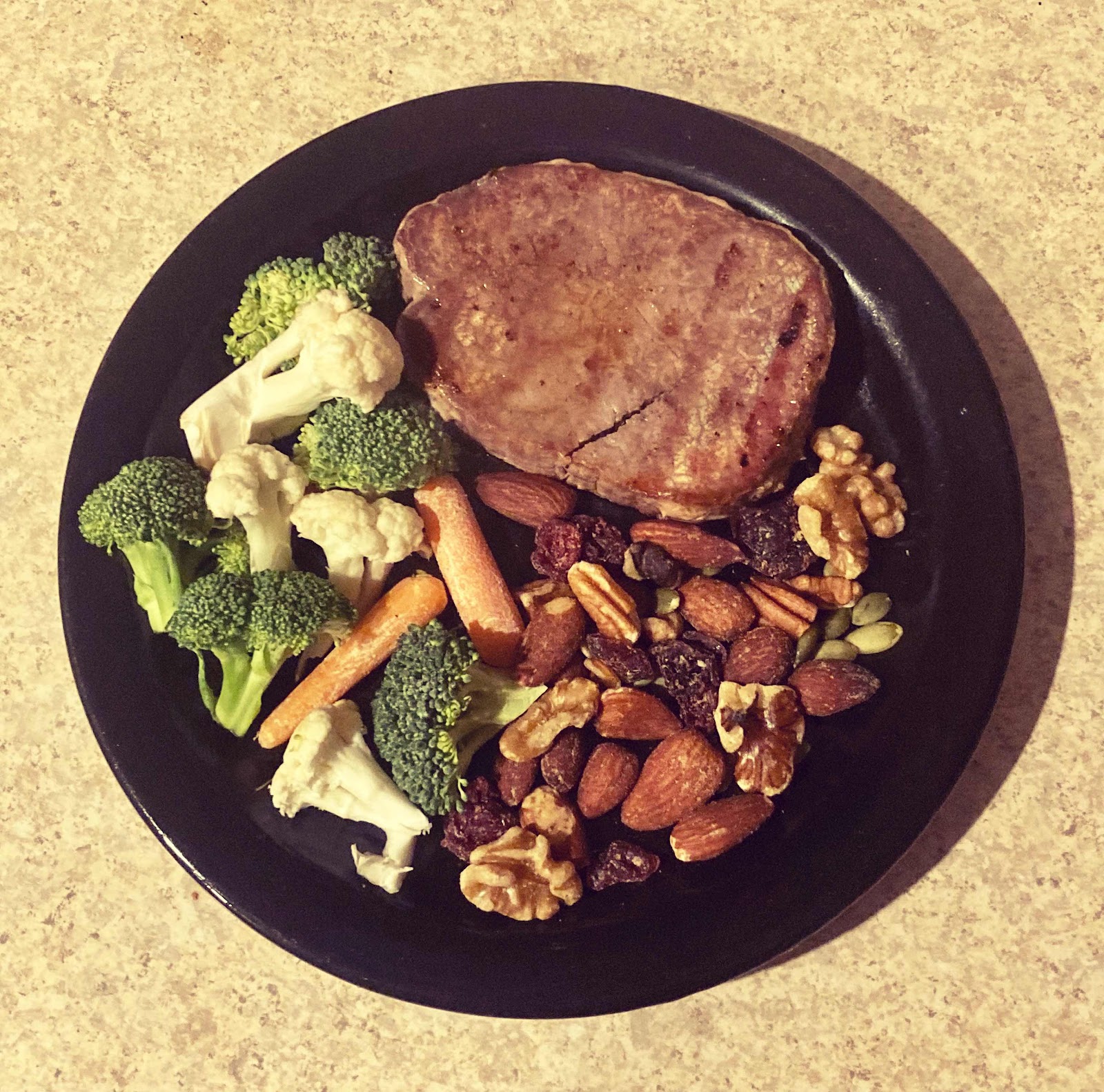
Dinner post fasting meal of steak, nuts and seeds and some vegetables. In my nutrition program I teach the concept of “eating in threes”. No dumbass not eating in trees. Koala bears do that. 😀 

Eating in threes simply means that you create your meals around the three main macronutrients of protein, fat and carbs. In this example the steak is the protein, the nuts and seeds are the fat and the vegetables are the carbs. And yes vegetables are fibrous carbs. 

Based upon your goals, you adjust the ratio of these macronutrients to meet your needs. For most people it is easier to understand and visualize this concept by using the plate method as shown here. 

Using this method of meal preparation allows your body to receive appropriate amounts of all three macronutrients based upon your goal. This also prevents huge blood sugar and insulin spikes and dips which cause a number of problems, especially around the diabetes and weight loss topics. 

Also getting in the appropriate amount of good fats allows your body to absorb and metabolize fat soluble vitamins and facilitates the mechanisms which oxidize storage fat while maintaining lean body mass. 

So figure out the healthy foods that you like in each category of protein, fat, and carbs. Then pick one from each category to create a meal. Repeat as necessary. There is your meal plan and now you know what has to go on your grocery list. Go get it, prepare it and eat it. Then hit the gym and start jacking steel. 

Do the work, reap the rewards. 

In the end it comes down to eating the right amount, of the right stuff, at the right time to support your goals. So go eat and hit the weights!

Eric Dempsey 
MS, NASM Fitness Nutrition Specialist,
NESTA Sports Nutrition Specialist 

Saturday, April 23, 2022

Intermittent Fasting doesn’t mean starvation


Post fasting meal: sirloin steak, smokehouse almonds, sweet potato, and red grapes. 

After my daily fasting window ends, I’m ready to eat! I use the 16/8 method daily. The fasting window is 16 hours and the feeding window is 8 hours. I usually have 4-6 smaller meals during my 8 hour feeding window. 

Based upon the best fit for me, I picked this fasting protocol after testing the most common 4 methods over a span of 8 months beginning in 2011. 

I tested these methods again in 2012 and decided to stick with the 16/8 protocol. 

There are many different fasting protocols. Use the one that fits your daily routine the best. 

One of the common flaws that occur with people who try to lose weight with intermittent fasting is that they do not eat the required amount of food in the proper macronutrient ratio. 

Intermittent Fasting (IF) is not about starving. It is simply a more disciplined and structured schedule of eating and not eating. 

The goal for body composition change is to lose fat while maintaining or building muscle and lean body mass. The number on a scale is irrelevant. The process has to be done correctly for optimal results. 

Most people can benefit from Intermittent Fasting. But it takes some learning, knowledge, and experience to do it right.

I have a package deal of 4 digital books on Intermittent Fasting which take you through all of the relevant information needed to be successful with IF. 

Right now this IF package is on sale for a ridiculously low price. 

I’ve made these books in PDF format so you can immediately download them and start reading. 

If you are interested in learning more about Intermittent Fasting and how to successfully implement it into your lifestyle, 
visit my online book store IF direct link here:

https://payhip.com/b/6oOK


https://payhip.com/b/6oOK


Wednesday, March 24, 2021

Micro Meal Method Example


The micro meal method is an effective way to improve body composition, while maintaining blood sugar and insulin levels. 

The old adage of "eat a little, a lot", comes into play here as this method requires you to eat multiple small meals, every 1-2 hours for about 72 hours or 3 days. 

Each meal should contain a protein, fat, and carb. These multiple small meals allow you to decrease fat levels while maintaining or even increasing lean body mass levels, depending on the total calories consumed each day and the macro nutrient ratio.

I have personally been using this method for decades, and have had great success with my clients who have tried this method. Give it a try and see if it works for you.

Eric Dempsey
MS, NASM Fitness Nutrition Specialist

Monday, January 11, 2021

10 Health Benefits of Coconut


Coconuts are a very healthy food. And despite that it contains saturated fat, coconut has numerous health benefits. In the video above, I list 10 of its many benefits.

Monday, December 21, 2020

New Video: Quick Meal with Cottage Cheese, Mixed Nuts, and Fruit


You can make a variety of quick meals using cottage cheese, 
or yogurt, mixed nuts and fruit.

Check out the latest books added to the book store here

Eric Dempsey
MS, NASM Fitness Nutrition Specialist

Thursday, June 4, 2020

Do you really have a handle on your nutrition plan?


Quick meal: baked chicken breast, mixed nuts and seeds, and spinach.

Cooking the chicken in bulk allows me to create these meals very quickly.

The tradition of cooking each meal individually is time consuming and resource intensive.

Most people are busy and often skip this for a fast food option. That leads to body composition and health issues, when done for too many consecutive weeks.

Cooking in bulk and meal prepping, as part of your comprehensive meal planning, eliminates the need for reliance on fast food.

I can have 10 of these meals ready to go in Tupperware containers in a very short amount of time.

Some people think that I post my meal pics because I think that someone cares about what I have for dinner. Trust me, I know that nobody cares about what anyone has for dinner.

It may surprise some of you to know that I am a certified nutrition coach and weight loss specialist, amongst many other additional certified specialist titles. I have been teaching, coaching, and mentoring clients in nutrition, fitness, health, and wellness for many years now.

When I show you a pic of a meal, I'm showing you an example of a proven solution. If you struggle with weight management issues, I would recommend trying to use my meal pics as an example. In a few weeks time, you would see some dramatic progress, especially when combined with a challenging exercise program. - which of course, I also coach clients in.

If you think you have a handle on your nutrition plan, but are not making the desired progress which you seek, ask yourself the following 4 questions:

1: Do you have a clearly defined goal? If not, you need to create one using the SMART method ( specific, measurable, attainable, realistic, and timely ). Find your "WHY".

2: Based upon your goal, what is your optimal daily calorie intake? You should also know what your current daily caloric intake is, and the difference between the two that you have to adjust for.

3: Based upon your goal, what is your optimal macronutrient ratio of protein, fat, and carbs? You should also know what your current daily macronutrient ratio is, and the difference between the two that you have to adjust for.

4. Based upon your goal, what type of exercise, lifestyle and mindset changes are required? You should know where you are at, so you can determine what changes are needed.

If you do not know the answers to these questions or how to find / calculate the answers to these, then it's safe to say that you do not have a sufficient grip on your nutrition plan.

I teach clients how to specifically create their individual nutrition plans based upon their specific goals.

There is a lot more to it than to simply "eat less and exercise more". Over the last few decades, I have rarely ever seen any of my clients succeed by starving themselves and doing more cardio. However, I have seen that plan fail repeatedly, time and time again.

So no, I don't post my meal pics because of my delusional assumption that you want to see what I had for dinner. I post my meal pics so you can see a variety of proven meals which can help you reach your goal.

Eric Dempsey
MS, NASM Fitness Nutrition Specialist


Thursday, August 29, 2019

Prep your meals by cooking larger quantities at one time

Image may contain: one or more people, kitchen and indoor

Baked chicken tenderloins in the oven, while cooking steak on the GF grill.

Once the steak is cooked, eggs will be next on the stovetop.

Image may contain: food

Prepping food in bulk gives you variety and plenty of food on hand.

Image may contain: food

Allocating time in the kitchen is a key to long term success for your health and fitness goals.

Eric Dempsey
MS, NASM Fitness Nutrition Specialist

Tuesday, April 10, 2018

The Top 13 Fat-burning Foods to Fight Stress


STRESS! 

It can be good or bad. 

Your body doesn't acknowledge the difference. 

It only sees change and a threat.

We all deal with it, and to cope we often turn to "comfort foods" that do nothing but pack on the pounds -- bad news for your waistline!

But did you know that you can actually burn fat while fighting stress when you choose the RIGHT foods? 

 It's true, and fortunately my trusted colleague Dr. Matt Roberson just wrote a brand new free report showing you the top 13 stress-busting, fat-burning foods. 

And even better you can download it for free for the rest of the day today. 

Get your free copy in just a few seconds here:

Eric Dempsey
MS, NASM Fitness Nutrition Specialist

Saturday, March 31, 2018

Why Is Adequate Vitamin Intake So Important?


Why Is Adequate Vitamin Intake So Important?

We have all heard that you should take your vitamins. Many people have been taught that you can get your required vitamins through having a healthy diet.

Are you getting enough of the right vitamins? Maybe, maybe not.

Performing a plethora of roles to maintain good health and development, vitamins are essential nutrients that we can’t live without.

Yet there are so many that perform wonders without our even actually being aware of it, until we don’t get sufficient amounts and problem occur.

Vitamins are characterized by the following:

• They’re found naturally in food, with varying amounts

• They can’t be made by the body (save for vitamin D after sun exposure)

• They are organic in their structure and can be broken down by air, heat or acid, making it more difficult for your body to absorb them since cooking and storage affects their chemical structure - even exposure to air.

• They’re crucial for normal and healthy development and functions

• When they become absent from the diet, it can cause certain deficiencies

There are 13 essential vitamins which are divided into 2 categories:

Water-soluble

- B vitamins

- Biotin (vitamin B7)

- Folic acid (folate, vitamin B9)

- Niacin (vitamin B3)

- Pantothenic acid (vitamin B5

- Riboflavin (vitamin B2)

- Thiamin (vitamin B1)

- Vitamin B6

- Vitamin B12

- Vitamin C

These vitamins need to be replenished on a daily basis since they’re easily absorbed into the bloodstream as food is digested or supplements are dissolved. Present in the watery sections of the food you eat, water-soluble vitamins are continuously regulated via your kidneys. Any excess is flushed out with urine.

Some of the roles these vitamins play are:

- produce and release energy

- boost immune system

- maintain tissue health

- build proteins and cells

- Produce collagen present in skin cells, blood vessel walls and gums that aids in the process of healing wounds


Fat-soluble

- Vitamin A

- Vitamin D

- Vitamin E

- Vitamin K

These vitamins are quite difficult to figure out because we’re more likely to be deficient in these types of vitamins; yet taking them for prolonged periods of time, especially supplements, can be toxic and very harmful to your health. These vitamins aren’t as easily transported through the body as water-soluble vitamins.

In fact, any excess is stored in the liver and fat tissues for up to 6 months. First, they’re absorbed through the intestinal wall, then they enter the lymph vessels before making their way into the bloodstream.

Most fat-soluble vitamins need a protein carrier to facilitate their movement throughout the body.

Fat -soluble vitamins are responsible for the following:

- protect vision

- build bones

- protect the body against illnesses, diseases, and free radical damage

- blood clotting

- formation of healthy red blood cells

- interact together favorably to enhance absorption

Vitamin Deficiencies

Unfortunately, nutrient deficiencies are extremely common. The main culprits are poor diet, digestive problems, or chronic stress.

“Nutrient deficiencies alter bodily functions and processes at the most basic cellular level,” says lecturer at the George Washington University Milken Institute School of Public Health in Washington, DC, Tricia L. Psota, PhD, RDN. “These processes include water balance, enzyme function, nerve signaling, digestion, and metabolism.

Resolving these deficiencies is important for optimal growth, development, and function.” They can also lead to diseases and chronic illnesses.

A common example is the lack of vitamin D and calcium can cause osteoporosis, a condition characterized by brittle bones.

People who are at most risk for nutritional deficiencies are:

- the elderly

- athletes who train intensively for long periods of time

- those with low income

- smokers

- consumers of alcoholic beverages

Some of the most common symptoms of vitamin deficiency are:

- hair loss

- oral health problems

- muscle cramps in the calves and arches of the feet

- muscle weakness

- fatigue

- shortness of breath

- dizziness

- irregular heartbeats

- mental fogginess

Every one of the 13 vitamins has a certain role but each also works in unison with the other 12 to lead to best possible physical condition. This is why it’s so important to eat a balanced diet of fruits, vegetables, dairy, whole grains, beans and lentils, lean meat, and fish to make sure you’re getting all the essential nutrients your body needs to prevent deficiency, promote fat loss and enhance muscle gain.

Supplements and multivitamins are a great way to make sure you’re getting the vitamins you need. Talk to your doctor to make sure you’re getting the right amount instead of getting too little and not getting the most out of your supplements or getting too much and increasing your risk for toxic reactions. A simple blood test is all you need to know whether or not you’re vitamin deficient.

Vitamins and all micronutrients are very important to your overall health. Make sure that you are getting the proper amounts through your nutrition plan. 

Stay healthy and eat right!

Eric Dempsey
MS, NASM Fitness Nutrition Specialist

Saturday, June 24, 2017

Tuesday, February 9, 2016

New! The Gentlemen's Cookbook On Sale For Valentine's Day


The  Gentleman's Cookbook is a complete new way at looking
at cooking and it focuses on how to cook for more than just
yourself. We are talking cooking gourmet 3-course meals.


We wanted to bring back the “old school” approach of being
a gentleman that ANY man could follow.

Learn how to make great meals that your partner will love, 
especially on Valentine's Day.

Grab your copy Now!

MS, NASM Weight Loss Specialist

Wednesday, February 3, 2016

Living Life The Paleo Way


Paleo nutrition fundamentals can get you healthy and lean, by focusing on good whole foods.

If you want to learn more about Living Life The Paleo Way, 

visit my site here: http://bit.ly/1QXd1WV

Eric Dempsey
MS, NASM Weight Loss Specialist

Monday, February 1, 2016

Intermittent Fasting: Can it be used with another diet for weight loss?


Video 4 of the intermittent fasting series.

Check out the latest video to find out if intermittent fasting can be used with other diets for weight loss.

Grab your free intermittent fasting handout here: FREE IF INFO HANDOUT

Eric Dempsey
MS, NASM Weight Loss Specialist
Dempseys Resolution Fitness

Friday, January 22, 2016

The Main Benefits of Intermittent Fasting Explained


Video 3 in the intermittent Fasting (IF) series.

Here I explain the 5 main benefits of IF.

Sign up for your free IF Handout that outlines more info about IF and how to implement it.


Eric Dempsey
MS, NASM Weight Loss Specialist

BioTrust 15% Off Sale with FREE Shipping - 48hrs Only!


New BioTrust Sale!

Get 15% off the entire product line PLUS FREE domestic shipping on everything.

Just use the coupon code FREESHIP15 at checkout to save 15% on your entire order PLUS get free shipping for the next 48 hours ONLY -- all products, no quantity limits or product restrictions!

Metabo379


This is the first time they have EVER done this (and it may be the last!), so take advantage and stock up on your favorite BioTrust products today. The more you buy, the more you save, especially on the shipping charge as the package gets heavier (but the domestic shipping price still stays at $0.00 no matter how big the package gets)!

BellyTrim XP


This is a great opportunity to save big and stock up on high quality nutrition supplements that will help you reach your goals fast!


Eric Dempsey
MS, NASM Weight Loss Specialist