Liv Pur Nutritional Supplements

Showing posts with label performance. Show all posts

Tuesday, May 11, 2021

Iron Garage Wisdom, Thoughts, and Tips Part 2


BLUF: 1. When you feel energized, go for it.
2. Performance correlates with calorie intake
3. Flexible workout programming is more realistic and productive than rigid programming.
4. The best plans usually fail as soon as the first shot is fired, first punch is thrown, or first rep is executed. Have a plan B, C, and D.
5. Listen to your body when you have the experience to do so.

Last night's workout went way better than I thought it would. The workout consisted of a warmup: 2 minutes sanddune stepper march in place, 1 set of standing band chest press x 20, 1 set of standing band chest flyes x20, 1 set of bench press 135x10. Followed by light stretching. Then slingshot bench press sets of 225x11, 235x8, 245x8, and 255x5. Rest periods between sets was 2-5 minutes for maximizing ATP/CP cycle replenishment. The original plan was to do 4x5 with 235.
 
I felt really good and energized from the beginning. I know from experience that when I feel this way, I need to do more than my original plan intended. Had I stuck with the original plan, I would have had success and a good workout but would have missed the opportunity to do better.
 
225 is my baseline assessment weight on the bench press for me and my clients. Decades of experience have taught me that 225 is a true indicator of where you are at fitness wise (for males). 5 reps or less means that you suck and need to do better. 6-8 reps means that you suck less but need to do better. 8-10 reps means that you are doing good so keep at it. More than 10 reps means you are on track and need to build upon where you are at.
 
How much you eat directly impacts performance. Simple version: If you have been eating big, your performance will be much better. If you have been eating light you will be sucking wind in the gym. Macronutrient ratio and total calorie intake based upon goal requirements are very important to track and understand.
 
Using the wrong rest periods and under eating will kill performance and progress. Also understanding the 3 main metabolic energy pathways and how it impacts and relates to your training is important to learn and understand. Inexperienced people who say that they listen to their bodies and flow based upon how they feel usually do not maximize progress and potential.
 
Your body is programmed to protect you and always seeks homeostasis. This unfortunately does not take your performance goals into consideration and will usually cause you to come up short. I don't know how many times I've heard people tell me that I wasn't hungry so I didn't eat, or gurus telling people to eat until you are satisfied.
 
Performance doesn't care how you feel. Your body as a machine, needs fuel and raw materials to achieve the goals that you have set. If you don't provide the right amount, of the right fuel, at the right time, the machine cannot produce the desired result. How you feel about that does not matter. 

Until next time-Go eat and hit the weights!

Eric Dempsey
MS, ISSA Master Trainer


Sunday, April 19, 2015

Nutrition Lesson From ILRRPS


The nutrition lesson from the international long-range reconnaissance patrol school (ILRRPS) in southern Germany. 

In 1989, I attended the winter patrol course at the international long-range reconnaissance patrol school. 

This course taught LRRP patrolling operations in Alpine and winter, mountainous environments. 

The physical demands of operating in an Alpine mountain environment are very high. 

Nutrition and hydration are vital keys to success. 

In addition to our standard rations that we were issued, we were also given large quantities of German chocolate bars. 

Some were plain chocolate while others had chocolate and nuts. 

The fundamental nutrition lesson from the ILRRPS course was to eat a little, a lot. 

This concept of eating a little, a lot, is a fundamental concept used throughout many different styles of nutrition and fitness training as in bodybuilding and other body transformation programs. 

Using this concept provides your body with a steady stream of fuel so that your body does not become catabolic and start eating itself for nutrients. 

Preserving lean body mass during extended operations is critical for survival. 

This also provides for maintaining energy levels and prevents early fatigue.

Operating in mountain environments during the winter requires many calories and it makes every task very difficult. 

Without constant fueling, you'd become fatigued very quickly and the odds of you completing your mission would be degraded. 

It is an old concept in the nutrition and fitness worlds but it is one that is proven and has been a constant throughout the ages. You can't go wrong with it. 

So anytime you're outdoors, plan for constant nutrition by carrying items that are easily storable and that you can have readily available; such as trail mixes, beef jerky and food items of a similar nature.

Fuel the machine properly and it will perform at amazing levels for you. 

Remember the ILRRPS lesson- when in doubt, eat a little, a lot. 

Eric Dempsey
MS, NASM C.P.T.
Master Sergeant,
U.S. Army Retired

Thursday, August 28, 2014

Dempsey Becomes Professional Member of the National Exercise & Sports Trainers Association


MEDIA RELEASE
FOR IMMEDIATE RELEASE
August 28th, 2014

Contact: Eric Dempsey

Phone # 706-573-4236

Email: eric@dempseysresolution.com

Eric Dempsey Becomes a Professional Member of the National Exercise and Sports Trainers Association.

Association offers gold standard training for fitness professionals across the globe.

Summary: Eric Dempsey was recently named a professional member of the National Exercise and Sports Trainers Association (NESTA). NESTA is a leader in innovative solutions for fitness, nutrition and wellness professionals, and business owners.

Salem, AL – Joining more than 55,000 others across the world who are passionate about the best in health and fitness, Eric Dempsey recently became a professional member of the National Exercise and Sports Trainers Association (NESTA). NESTA is a leader in innovative solutions for fitness, wellness professionals and business owners. The membership includes educational news, new programs, career-enhancing products, live webinars and more valuable information designed to help individuals advance their fitness and coaching careers.

Dempsey is a retired Army master sergeant, graduate student in exercise science at CAL U and is the owner and trainer at Dempsey's Resolution Fitness. He offers personal training and group fitness classes, specializing in strength and conditioning and body transformation training. Dempsey is well qualified and has numerous certifications. He is a Certified MMA Conditioning Coach, Certified Kung Fu Fitness Instructor, Certified Muay Thai Fitness Instructor, Certified Endurance Sports Trainer and a Certified Food Psychology Coach through the National Exercise and Sports Trainers Association.

“By joining NESTA, Eric made a commitment to a life time of health, wellness and education,” said Dr. John Spencer Ellis, founder of NESTA. “As NESTA has continued to grow over the decades, we have helped world-class personal trainers and other top-notch fitness professionals grow their careers, and we look forward to joining Eric on this amazing journey as well.”

Others interested in becoming a professional member of NESTA and enjoying the benefits that come along with it can visit http://www.nestacertified.com/ for further details. NESTA offers a variety of certification courses, in the health, fitness, wellness, nutrition and coaching fields.

“I am thrilled to join the ranks of NESTA’s professional members and to take the next step in my professional development,” said Dempsey. “I look forward to sharing in this growing community of personal trainers, fitness pros, and others who are passionate about good health and good living.”

About Dempsey's Resolution Fitness

Since 2006, Dempsey's Resolution Fitness has helped hundreds of people, from all walks of life and fitness levels, to achieve their fitness goals and live healthier, fitter lives. Services offered include personal training, small group fitness classes, online coaching, nutrition and lifestyle coaching, corporate wellness programs, military and athletic performance enhancement training, older adult / seniors training, prenatal / maternity training, youth training, martial arts and self defense training, survival training, basic firearms training and specialized military skills training. For more information, please visit http://www.dempseysresolution.com

About the National Exercise & Sports Trainers Association

Since 1992, the National Exercise & Sports Trainers Association (NESTA) has been a leader in innovative solutions for fitness, nutrition and wellness professionals, as well as club owners. Founded by Dr. John Spencer Ellis, NESTA now has more than 55,000 members in 55 countries, and it is one of the largest fitness associations in the world, as well as the fastest growing association of its kind in the United States. For more information on becoming a professional member of NESTA, please visit http://www.nestacertified.com/ 

Saturday, January 11, 2014

What causes lower back pain in athletics?


What causes lower back pain in athletics?

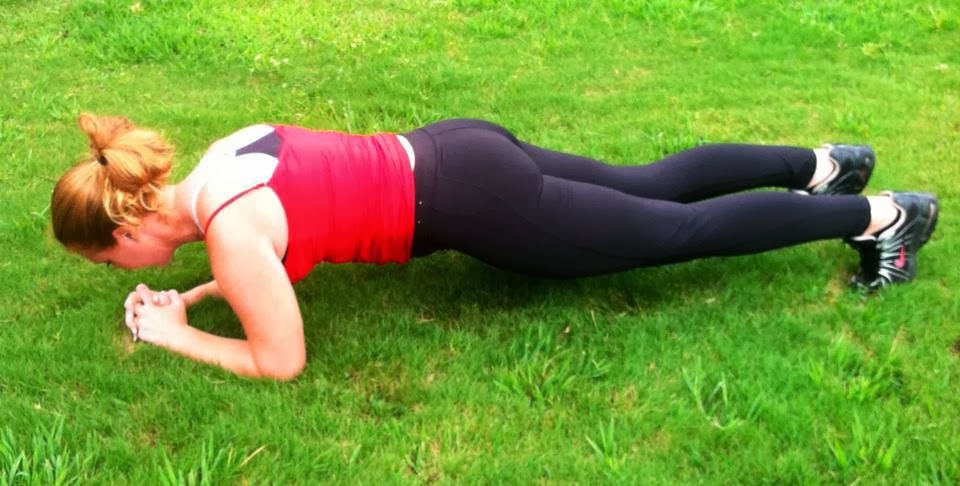
              In all my years of training different types of clients, lower back pain has been a constant and frequent detractor from progress for many people. Most athletes and people in general, do not know and are not taught, how to move properly, using the correct form and muscles. Lower back pain will be ever present as long as that continues.

              In the Encyclopedia of Sports Speed, Dintiman and Ward (2011), it states that “the exact cause of most lower back pain (LBP) in the general population remains a mystery. Blaming pressure against a spinal nerve caused by bulging spongy discs is incorrect when a normal back without some degree of bulging is the exception. Other theories suggest that lower back muscle spasms or arthritic spurs on bony overgrowth compress spinal nerves. Trauma of some type in athletes certainly contributes to the condition.”


            I have to disagree with this statement for a primary reason. The statement mentions the general population and not, specifically, athletes. I am not saying that the situations in the statement do not occur, as they most certainly do. However, the general population and athletes are two different animals and their respective causes of lower back pain are, more than likely, from very different sources. There will always be an overlap between the two groups but that is minimal, as the two have very different daily dynamics, affecting their lower backs and resulting lower back pain.

             Concerning what causes lower back pain in athletics, I believe it mostly has to do with muscular imbalances and a missing emphasis, on posterior chain training and development.


                 In the article, Lower Back Savers, by Eric Cressey, he states that “broadly speaking, you can classify the majority of back pain sufferers into extension-based or flexion-based back pain.”

                 Muscular imbalances and inadequate posterior chain development contribute to lower back pain in the general population and with athletes. The athletes conduct very demanding, dynamic movements frequently, whereas the general population is normally less active.


                   Cressey states that “Effectively, the hip flexor shortness and insufficient glute contribution leads athletes to substitute lumbar extension for hip extension in movements such as deadlifting, jumping, throwing, or any other task that requires hip extension.” From my personal experience, this is where I see the majority of lower back pain originating from in athletes,. There are and always will be exceptions. 

                   I see more flexion based lower back pain in the general population clients, who sit for long periods of time and are much less active than athletes.


                   Eric Cressey and Mike Robertson, in their article, Get Your Butt In Gear!, state that “We see tons of injuries to the hamstrings and lower back, but rarely encounter any sort of injury to the glutes. The fact of the matter is that most athletes are tight in the hamstrings, lower back and hip flexors. This collection of problems is related to a lack of strength and motor control in the gluteal muscles. When the hip flexors (antagonists to the gluteus maximus) are overactive, the gluteus maximus becomes weak via a mechanism known as reciprocal inhibition. Furthermore, when our "butt" muscles aren’t up to the task, the hamstrings and erector spinae muscles are forced to work overtime to compensate. This is known as synergistic dominance. This unfortunate cycle often results in injury, or at the very least, sub-optimal levels of performance.”


                   My experiences, with a wide variety of athletic and general population clients, over many years, lead me to believe that the cause of lower back pain in athletics vary but can usually be related to muscular imbalances and inadequate posterior chain training and development. Of course, none of this negates the importance of proper assessment and treatment, from qualified medical professionals.

What can you do to prevent lower back pain?
1. Stretch the tight areas
2. Strengthen the whole body especially weak areas and your core
3. Learn proper form and technique for movement and exercise
4. Activate the proper muscles
5. Maintain a healthy and fit lifestyle once problem areas have been improved

References:

Cressey, E., (2009, May 5). Lower Back Savers. Retrieved from http://www.t-nation.com/free_online_article/sports_body_training_performance_repair/lower_back_savers

Cressey, E., Robertson, M., (2004, Sep 6). Get Your Butt In Gear. Retrieved from http://www.t-nation.com/free_online_article/sports_body_training_performance_repair/get_your_butt_in_gear

Eric Dempsey
NASM Certified Personal Trainer